AI CSR For HVAC Companies matters because HVAC contractors lose revenue when high-intent callers reach voicemail, wait too long for a callback, or never get booked into the right next step.
AI CSR For Contractors matters because HVAC contractors lose revenue when high-intent callers reach voicemail, wait too long for a callback, or never get booked into the right next step.
If you run an HVAC company, you already know the single biggest leak in your revenue: unanswered calls. A prospective customer calls at 7 PM on a Tuesday when your office is closed. Nobody picks up. They move on to your competitor. That job — worth $400, $800, maybe $3,000 for a system replacement — is gone.
An AI CSR for HVAC is built specifically to stop that from happening. FlowSystem AI is an AI receptionist platform built specifically for HVAC contractors to answer calls, qualify leads, and book jobs automatically. This guide explains exactly what an AI CSR is, how it works, what it replaces, and whether it’s worth the investment for your company.
Is an AI CSR worth it for my HVAC, plumbing, or electrical company?
Yes, an AI CSR is worth testing when your HVAC, plumbing, or electrical company loses booked jobs because calls go to voicemail, office staff get overloaded, or after-hours callers wait too long for a callback. It is not a replacement for every human customer-service decision. It is strongest when it answers immediately, captures the caller's issue, qualifies urgency, routes emergencies, books the right next step, and sends the team a clear call summary.
For contractors, the practical test is simple: compare missed calls, booked jobs, response time, and handoff quality before and after the AI CSR is installed. If the system books calls that were previously missed and reduces manual follow-up without creating messy dispatch work, it is doing its job.
Where AI CSR fits for HVAC, plumbing, and electrical contractors
An AI CSR for HVAC companies should understand no-cool calls, tune-up requests, replacement estimates, and emergency routing. An AI CSR for plumbing companies should capture leak, drain, water heater, and emergency context. An AI CSR for electricians should capture outage, panel, breaker, fixture, and safety details before routing the call. The workflow is similar across trades, but the intake questions and routing rules need to match the service line.
What Is an AI CSR for HVAC?
A Customer Service Representative (CSR) is the person who answers your phones, takes service requests, qualifies callers, and schedules jobs. In most HVAC companies, this is either a full-time office employee, a part-time admin, or a shared answering service.
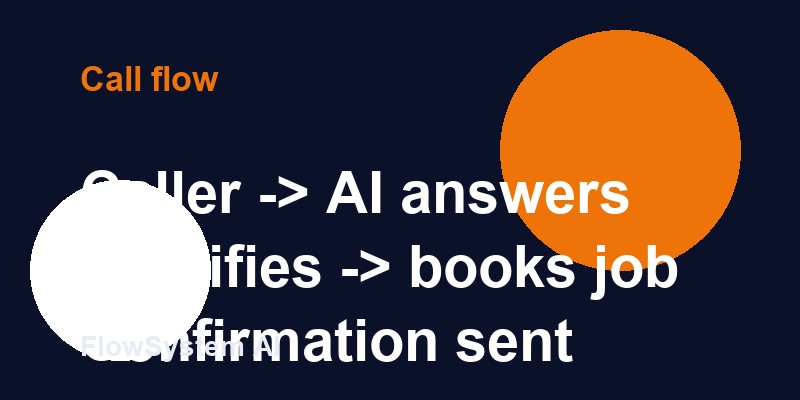
An AI CSR for HVAC is software that handles all of those same tasks — without a human on the other end of the line. It answers every inbound call (or text) in real time, collects the caller’s information, determines the urgency and nature of their problem, qualifies whether they’re a new or existing customer, and either books them directly into your schedule or routes them to the right person on your team.
The critical distinction from a generic answering service: an AI CSR is trained specifically for HVAC. It understands the difference between a “no-cool call” in August and a “furnace tune-up” request in October. It knows what questions to ask to determine system age, equipment type, warranty status, and whether the call is emergency or routine. That HVAC-specific intelligence is what makes it useful — not just a voice that says “we’ll have someone call you back.”
How an AI CSR for HVAC Works: 7 Core Functions
1. Answers Every Inbound Call, 24/7
The AI picks up on the first or second ring, any time of day or night. Unlike a live CSR who goes home at 5 PM or an answering service that puts callers on hold, the AI handles simultaneous calls without delay. During peak season — when a heat wave hits and your phones are ringing non-stop — the AI scales to handle every single call with no wait time.
2. Qualifies the Lead Before Anyone Else Touches It
Before scheduling anything, a good AI CSR gathers the key information your dispatch team needs:
- Is this a new or existing customer?
- What type of equipment (residential, commercial, brand)?
- What’s the age of the system?
- Is this an emergency (no heat/no cool) or a routine service request?
- Do they have a service agreement with you already?
This qualification step is what separates an AI CSR from a basic answering service. The AI doesn’t just take a message — it collects actionable data so when your tech shows up, they already know what they’re dealing with.
3. Books Jobs Directly Into Your Schedule
Integrated with scheduling tools like ServiceTitan, Jobber, or Google Calendar, the AI CSR can offer available appointment slots and book the job in real time — without any human involvement. The customer gets a confirmation. Your dispatch board fills up. No callbacks required.
4. Handles After-Hours and Emergency Calls
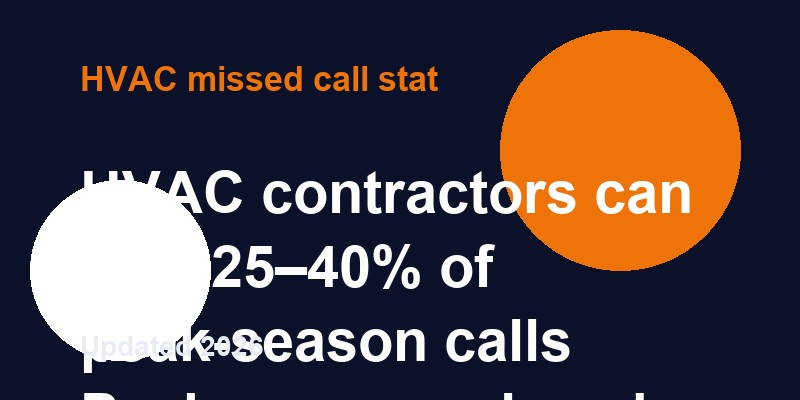
Contractors report that 30–40% of their calls come outside normal business hours. The AI handles these with specific logic: routine requests get logged and scheduled for the next available window, while emergency calls (no heat, no cool, gas leak, water from the unit) trigger an immediate escalation to your on-call tech via text or call.
5. Sends Appointment Reminders and Confirmations
After a job is booked, the AI sends automated text/email confirmations and reminders 24–48 hours before the appointment. HVAC companies typically see 15–25% fewer no-shows when automated reminders are in place.
6. Captures Missed Calls and Texts as Leads
If a caller hangs up before the AI can answer, or texts rather than calling, the AI captures that contact attempt and follows up automatically with a text message. This alone recovers a significant portion of leads that would otherwise be permanently lost.
7. Routes Urgent Calls to Live Staff When Needed
The AI doesn’t try to replace every human interaction. For calls that require human judgment — a complex commercial bid, a customer complaint, a service agreement negotiation — the AI identifies the situation and routes the call to the right person immediately.
AI CSR vs. Live CSR: What’s the Same, What’s Different
Understanding what an AI CSR replaces (and what it doesn’t) helps set realistic expectations.
| Function | Live CSR | AI CSR |
|---|---|---|
| Answer calls 24/7 | ❌ (limited hours) | ✅ |
| Handle simultaneous calls | ❌ (one at a time) | ✅ |
| Qualify leads consistently | Sometimes | ✅ Always |
| Book appointments | ✅ | ✅ |
| Build customer rapport | ✅ High | Moderate |
| Handle complex complaints | ✅ | Limited — escalates |
| Cost per month | $3,000–$5,000+ (salary) | $300–$600 |
| Training time | Weeks | Days |
The AI CSR handles the volume and consistency that a live CSR struggles with — after-hours coverage, peak-season call spikes, and routine scheduling. The live CSR handles the relationship and exception work — upset customers, complex jobs, service agreement renewals.
For most HVAC companies with 5–50 technicians, the right approach is an AI CSR handling the routine intake plus a part-time or full-time office person handling customer relationships and dispatch oversight.
What Makes an AI CSR HVAC-Specific?
Generic AI phone agents (or answering services with AI features) aren’t trained for HVAC workflows. An HVAC-specific AI CSR has:
HVAC vocabulary and intent recognition. It knows what “my Goodman unit won’t cool” means — and that it’s different from “my Carrier system needs a tune-up.” It doesn’t require callers to use perfect language to capture the right information.
Seasonal escalation logic. During summer heat events, it prioritizes no-cool calls. During winter cold snaps, it prioritizes no-heat calls. The urgency logic matches how HVAC dispatching actually works.
Integration with HVAC service platforms. It connects to ServiceTitan, Jobber, HouseCall Pro, and other field service management tools that HVAC companies already use — so bookings land directly in your system.
Service agreement awareness. It can check whether a caller is an existing agreement customer and route them accordingly — giving agreement customers priority booking and flagging non-customers for upsell opportunities.
5 Signs Your HVAC Company Needs an AI CSR
1. You’re losing calls after 5 PM
If your office closes at 5 PM and your phone rings until 9 PM, you’re leaving revenue on the table. HVAC demand doesn’t follow office hours — especially during summer and winter peaks.
2. Your CSR is overwhelmed during peak season
One person can only handle one call at a time. During a heat wave, your phone rings constantly, your CSR falls behind, customers get frustrated, and some of them hang up and call someone else. An AI handles unlimited simultaneous calls.
3. You’re not sure how many calls you’re actually missing
Most HVAC companies have no visibility into missed calls. You don’t know how many people called, hung up, and never came back. An AI CSR gives you full call logs, transcripts, and analytics — so you can see exactly what you were losing before.
4. Your office staff spends most of their day on routine intake
If your CSR spends 60–70% of their day taking down the same information from new callers, an AI can handle that routine intake — freeing your office staff for work that actually requires human judgment.
5. Your close rate on inbound calls feels lower than it should be
If callers aren’t converting to booked jobs at the rate you’d expect, inconsistent qualification is often the culprit. An AI CSR asks the same qualifying questions on every single call — no variation, no rushing, no bad days.
How Much Does an AI CSR for HVAC Cost?
HVAC AI CSR platforms typically price in one of three ways:
Flat monthly subscription: $200–$600/month depending on call volume and features. This is the most common model for small-to-mid-size HVAC companies.
Per-call or per-minute pricing: $0.05–$0.25 per minute of call handling. Can be cost-effective for lower-volume operations but expensive during peak season.
Platform fee plus integrations: Some platforms charge a base platform fee ($100–$200/month) plus per-integration fees for ServiceTitan, Jobber, etc.
For a typical HVAC company handling 500–1,000 inbound calls per month, the all-in cost of an AI CSR runs $300–$600/month — compared to $3,000–$5,000/month for a full-time live CSR (salary, taxes, benefits, turnover costs).
The ROI math is straightforward: if the AI captures just 3–5 additional jobs per month that would have otherwise been missed calls, it pays for itself.
How to Implement an AI CSR for Your HVAC Company
Getting an AI CSR operational typically takes 3–7 business days. Here’s the standard process:
Step 1: Connect your phone system. Your business number forwards to the AI platform (or the AI platform provides a number that you forward to). No hardware changes required.
Step 2: Configure the AI for your company. Provide your service area, hours, service types, and escalation rules. The platform configures the AI to represent your business correctly.
Step 3: Connect your scheduling system. Integrate with ServiceTitan, Jobber, or whatever system you use for dispatch. The AI will read available slots and book directly.
Step 4: Set escalation rules. Define which call types trigger immediate escalation to your on-call tech and which get logged for next-business-day scheduling.
Step 5: Test with live calls. Run a few test calls through the system before going live. Adjust the intake questions and escalation logic based on how your actual calls flow.
Step 6: Go live. Turn on call forwarding and start capturing every inbound lead.
What HVAC Contractors Say After Switching
HVAC companies that implement an AI CSR typically report:
- Fewer missed calls. Contractors report near-zero missed calls during business hours and significant after-hours recovery.
- More consistent lead qualification. Every caller gets the same intake process — no variation based on which staff member answers.
- Less burden on office staff. Office personnel shift from answering phones to managing dispatch, customer relationships, and service agreements.
- Faster emergency response. With clear escalation logic, on-call techs get notified immediately about genuine emergencies instead of sorting through voicemails.
Limitations to Know Before You Buy
An AI CSR is not a silver bullet. Here’s what it handles well and where it falls short:
Handles well:
– Routine intake and scheduling
– After-hours call capture
– High-volume periods (heat waves, cold snaps)
– Consistent lead qualification
Falls short:
– Emotionally charged customer complaints that need a human voice
– Complex commercial bid conversations
– Situations requiring knowledge of a specific customer’s long service history
– Highly technical troubleshooting calls
For these situations, a well-configured AI escalates to a human rather than trying to handle it alone. The key is setting your escalation rules correctly during setup.
FAQ: AI CSR for HVAC Companies
What is an AI CSR for HVAC companies?
An AI CSR for HVAC is an automated phone agent that answers inbound calls, qualifies leads, and books service appointments on behalf of HVAC contractors. Unlike generic answering services, it’s trained specifically for HVAC workflows — including emergency call triage, seasonal demand spikes, and integration with HVAC field service platforms like ServiceTitan and Jobber.
How much does an HVAC AI CSR cost?
Most HVAC AI CSR platforms charge $200–$600/month depending on call volume and integration requirements. This compares to $3,000–$5,000+/month for a full-time live CSR. For companies missing 3–5 calls per month, the AI typically pays for itself through recovered jobs alone.
Can an AI CSR book HVAC jobs automatically?
Yes. When integrated with your scheduling platform (ServiceTitan, Jobber, HouseCall Pro, Google Calendar), an AI CSR can offer available appointment slots and book jobs in real time — without any human involvement. The customer gets a confirmation text or email immediately after booking.
How does an AI CSR qualify HVAC leads?
An AI CSR collects key qualification data on every call: customer type (new vs. existing), equipment type and age, nature of the problem (emergency vs. routine), service area, and whether the caller has an existing service agreement. This information gets logged to your CRM and passed to your dispatch team before the job is assigned.
What’s the difference between an AI CSR and an answering service for HVAC?
A traditional answering service takes a message and promises a callback. An AI CSR actually resolves the call — booking the job, escalating emergencies, and capturing complete lead information. The AI also works 24/7 without putting callers on hold or charging per-minute overtime rates during peak season.
AI CSR For HVAC Companies: The Fast Answer
AI CSR For HVAC Companies helps HVAC contractors answer every call, qualify the job, and move high-intent callers toward a booked appointment without waiting for a callback. This article explains how that works in real HVAC situations and what to look for before you choose a system.
Frequently Asked Questions
What should HVAC contractors know about ai csr for hvac companies?
HVAC contractors usually care about three things with ai csr for contractors: answering every call, booking more jobs, and keeping the follow-up process tight. That is why the strongest setup focuses on speed, clear qualification, and a reliable booking workflow.
What should HVAC contractors know about ai csr for hvac?
HVAC contractors usually care about three things with ai csr for contractors: answering every call, booking more jobs, and keeping the follow-up process tight. That is why the strongest setup focuses on speed, clear qualification, and a reliable booking workflow.
is an ai csr worth it for my hvac / plumbing / electrical company?
The real cost question is whether ai csr for contractors helps your HVAC company recover missed revenue. If it captures just a few additional high-intent calls each month, the payback period is usually much shorter than hiring more coverage.
What is ai csr for contractors?
Ai Csr For Contractors is the system an HVAC company uses to answer inbound calls, qualify the caller, capture job details, and help the team book work without sending leads to voicemail. The best setup makes the handoff fast and keeps the caller moving toward a confirmed appointment.
How does ai csr for contractors work for HVAC contractors?
Ai Csr For Contractors works by answering the call immediately, asking the right HVAC intake questions, capturing the customer’s contact and service details, and routing the next step based on urgency. That keeps after-hours callers from bouncing to the next contractor.
Is ai csr for contractors worth it for a small HVAC company?
The real cost question is whether ai csr for contractors helps your HVAC company recover missed revenue. If it captures just a few additional high-intent calls each month, the payback period is usually much shorter than hiring more coverage.
What should an HVAC company look for before choosing ai csr for contractors?
HVAC contractors usually care about three things with ai csr for contractors: answering every call, booking more jobs, and keeping the follow-up process tight. That is why the strongest setup focuses on speed, clear qualification, and a reliable booking workflow.
See How FlowSystem AI Works
See how FlowSystem AI answers HVAC calls, qualifies leads, and books jobs without sending callers to voicemail.
Or call or text (843) 868-5512 to hear Flora answer a real HVAC call.